

Quick Answer
The best surface is the one that fits the whole site.
There is no universal best outdoor basketball court surface. For many residential courts with a suitable hard base, an outdoor-rated modular sports tile can be a strong all-around candidate when drainage, replaceable sections, and manageable upkeep matter. Acrylic systems can suit owners who prefer a continuous painted finish, while other systems may fit different use, climate, access, and maintenance needs. The decision should follow documented performance for the exact product—not the material label alone.
On this page
Start with the court's job—not a material name
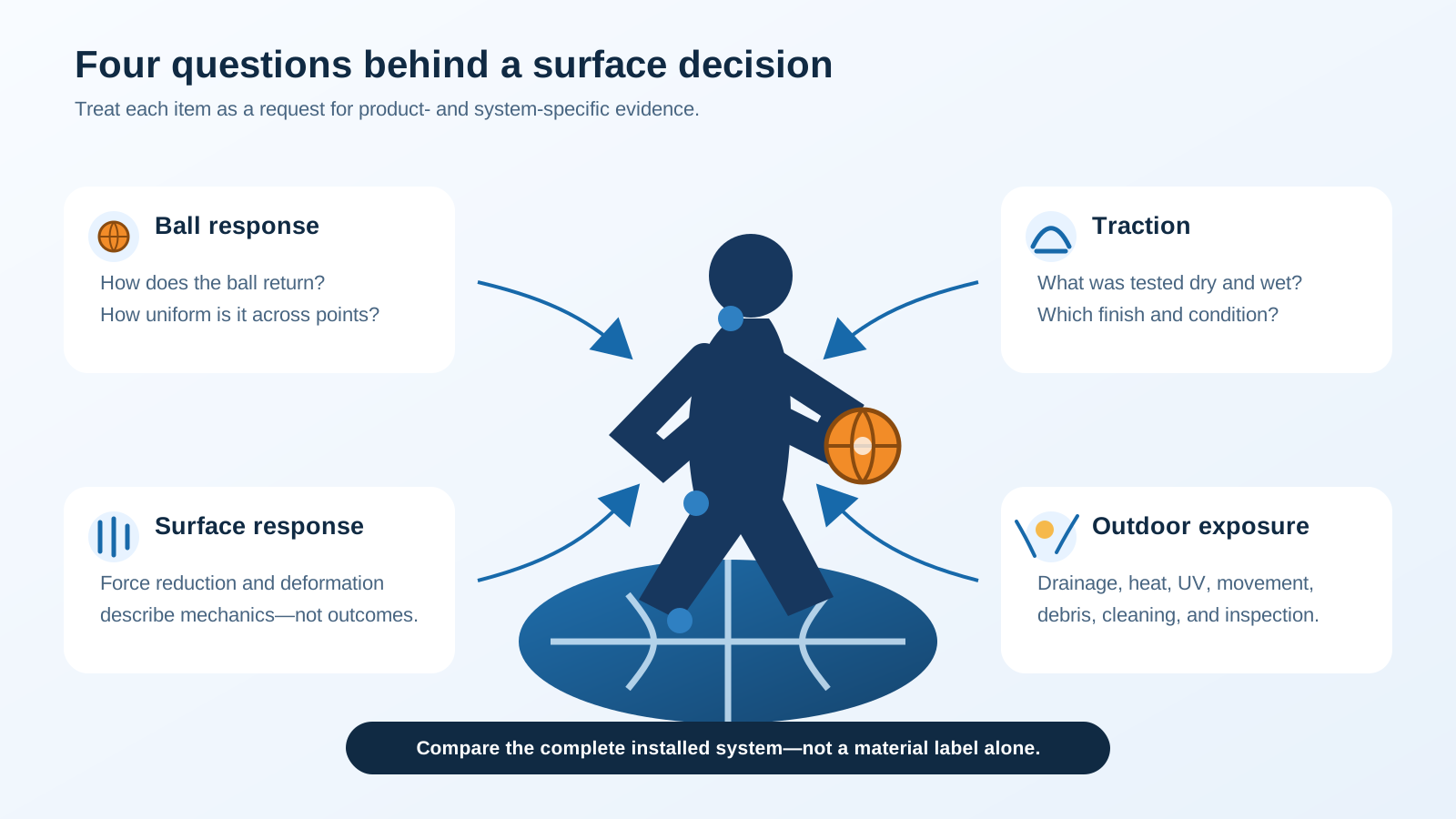
A backyard shooting area, school court, public park, and outdoor 3x3 venue do not share one brief. Define users, frequency, multi-sport needs, return-to-play after rain, maintenance responsibility, and applicable accessibility or facility requirements.
Separate the playing surface from the promise being made about it. A product described as polypropylene, acrylic, rubber, concrete, or asphalt is only a category. It does not, by itself, establish ball response, wet traction, temperature behavior, shock response, drainage, or durability. Those properties belong to a complete, tested system installed over a particular base.
FIBA's outdoor venue guidance treats the floor, sub-base, drainage, markings, equipment, edges, and surrounding area as connected parts of one facility. That system view is more useful than asking which top layer sounds most professional.
- Primary use: residential practice, school, community recreation, club training, or organized competition
- Player profile and frequency: occasional family play, daily training, or heavy public use
- Site exposure: rain, freeze-thaw cycles, high heat, direct sun, wind, leaves, dust, and shade
- Existing conditions: new construction, sound concrete or asphalt, aging court, drainage problem, or uneven base
- Operating plan: cleaning access, inspection frequency, repair method, replacement parts, and responsible owner
Sources: [1]
Compare four outdoor surface systems
Most outdoor basketball projects narrow to a hard concrete or asphalt playing surface, an acrylic coating system over a hard base, a modular sports tile system, or a synthetic rubber system. These are not interchangeable finishes. They handle water, movement, repairs, heat, markings, and player interaction in different ways.
This is a planning screen, not a specification. Formulation, build-up, base preparation, climate, installation, and maintenance can change results within every category. Compare named systems, not generic materials.
| Surface system | Often considered for | Potential strengths | Important trade-offs |
|---|---|---|---|
| Bare concrete or asphalt | Basic recreation areas or existing courts where the hard base is also the playing surface. | Simple build-up and direct response when sound, flat, clean, and consistently finished. | Hard underfoot; cracking, heat, abrasion, ponding, and wear depend on the base and climate. Asphalt and concrete are not equivalent. |
| Acrylic system over a hard base | Owners seeking a continuous colored finish, painted markings, and familiar hard-court appearance. | A uniform visual field; some specified systems include cushioning layers. | Cannot correct an unstable or poorly draining base. Crack repair, recoating, cure conditions, and wet-use rules are system-specific. |
| Outdoor modular sports tile | Backyards, schools, clubs, and renovations prioritizing open drainage and replaceable sections. | Open grids can pass water through the playing layer; sections may be serviceable; some systems add resilience. | Needs a suitable base. Ball response, joints, wet traction, thermal movement, anchoring, and comfort vary by tile and underlay. |
| Synthetic rubber system | Projects prioritizing a resilient continuous or prefabricated surface with documented basketball suitability. | Permeable and impermeable constructions are available; compatible systems may allow localized repair. | Thickness, texture, drainage, ball response, seams, adhesive, and weather exposure need review; rubber alone does not prove performance. |
Bare concrete or asphalt
- Often considered for
- Basic recreation areas or existing courts where the hard base is also the playing surface.
- Potential strengths
- Simple build-up and direct response when sound, flat, clean, and consistently finished.
- Important trade-offs
- Hard underfoot; cracking, heat, abrasion, ponding, and wear depend on the base and climate. Asphalt and concrete are not equivalent.
Acrylic system over a hard base
- Often considered for
- Owners seeking a continuous colored finish, painted markings, and familiar hard-court appearance.
- Potential strengths
- A uniform visual field; some specified systems include cushioning layers.
- Important trade-offs
- Cannot correct an unstable or poorly draining base. Crack repair, recoating, cure conditions, and wet-use rules are system-specific.
Outdoor modular sports tile
- Often considered for
- Backyards, schools, clubs, and renovations prioritizing open drainage and replaceable sections.
- Potential strengths
- Open grids can pass water through the playing layer; sections may be serviceable; some systems add resilience.
- Important trade-offs
- Needs a suitable base. Ball response, joints, wet traction, thermal movement, anchoring, and comfort vary by tile and underlay.
Synthetic rubber system
- Often considered for
- Projects prioritizing a resilient continuous or prefabricated surface with documented basketball suitability.
- Potential strengths
- Permeable and impermeable constructions are available; compatible systems may allow localized repair.
- Important trade-offs
- Thickness, texture, drainage, ball response, seams, adhesive, and weather exposure need review; rubber alone does not prove performance.
Sources: [1]
Ball response has two questions: level and uniformity
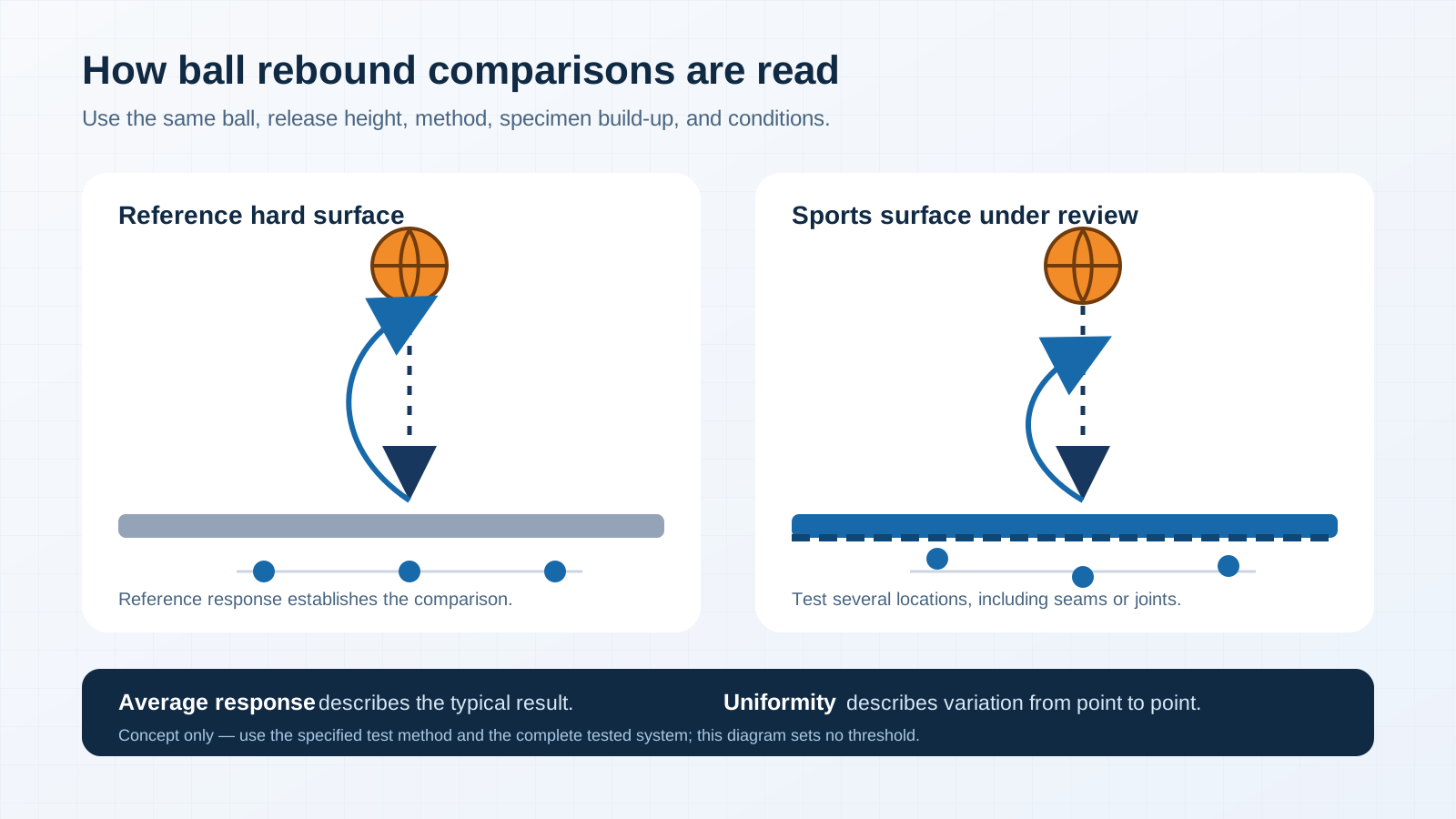
Basketball players notice both how high the ball returns and whether it responds consistently from one location to another. A single impressive bounce does not show that seams, paint, repairs, moisture, soft spots, or base irregularities will produce uniform play across the court.
Ball rebound testing controls the ball, release height, reference surface, measurement method, and reporting convention. The supplied ISSS review shows why results from different procedures are not directly comparable: a different measurement point or calculation can change the reported height.
For indoor sports floors, ASTM F2772-24 is the current ASTM specification. Its scope is multi-purpose indoor sports floor systems, not outdoor court approval. MFMA likewise explains basketball rebound as the response of the same ball on the sports floor compared with its response on concrete. These references are useful for understanding the property, but they do not establish compliance for an outdoor Courtily product.
Ask for the method, reference, average, variation across points, specimen build-up, and whether results represent laboratory material or a completed installation. Without context, a percentage may answer the wrong question.
Comfort is not one number—and not an injury guarantee
Force reduction describes how a surface attenuates a standardized impact. Vertical deformation describes how much the system deflects under a specified load. They are related to how a floor responds, but neither metric should be translated into a promise that a product prevents knee pain, protects children, or stops injuries.
The two properties must also be read together. A system can attenuate more impact yet deform in a way that feels less stable for a particular activity. Construction type matters: a rigid upper layer on resilient supports behaves differently from a locally deforming synthetic layer. The attached ASTM material illustrates why sports-floor evaluation uses several properties rather than one comfort claim.
For an outdoor purchase, ask whether any force-reduction or deformation data applies to the exact tile, underlay, base, temperature, and installed configuration being offered. Do not transfer an indoor laboratory classification to an exposed outdoor court, and do not compare results from different test methods as if they share one scale.
Traction, drainage, heat, and weather belong in the same review
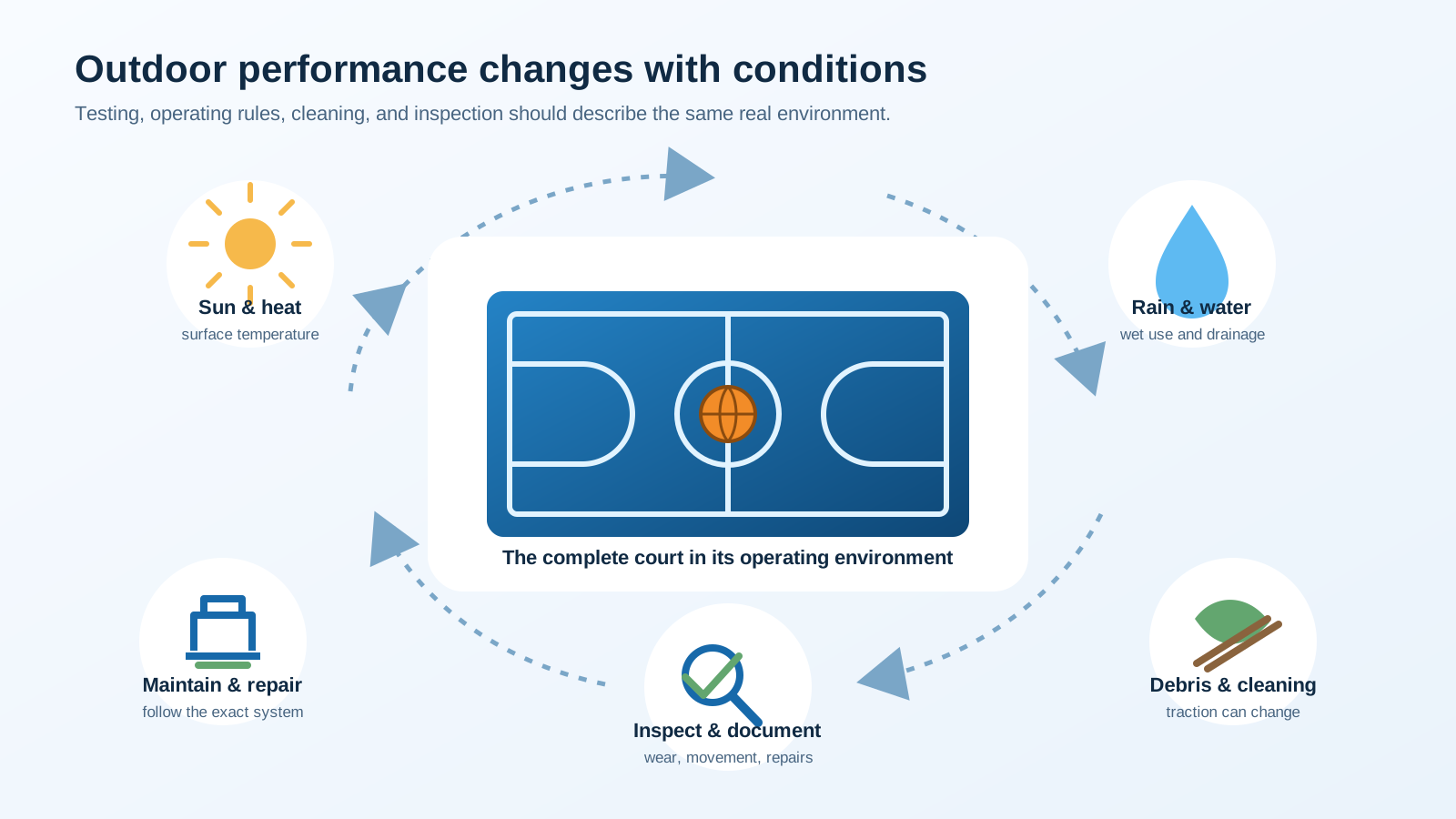
Dry traction is not enough for an exposed court. Water, dust, pollen, leaves, algae, surface wear, paint, and cleaning residue can change how shoes interact with the floor. Ask whether traction was tested dry, wet, or both, and which surface finish and maintenance condition were represented.
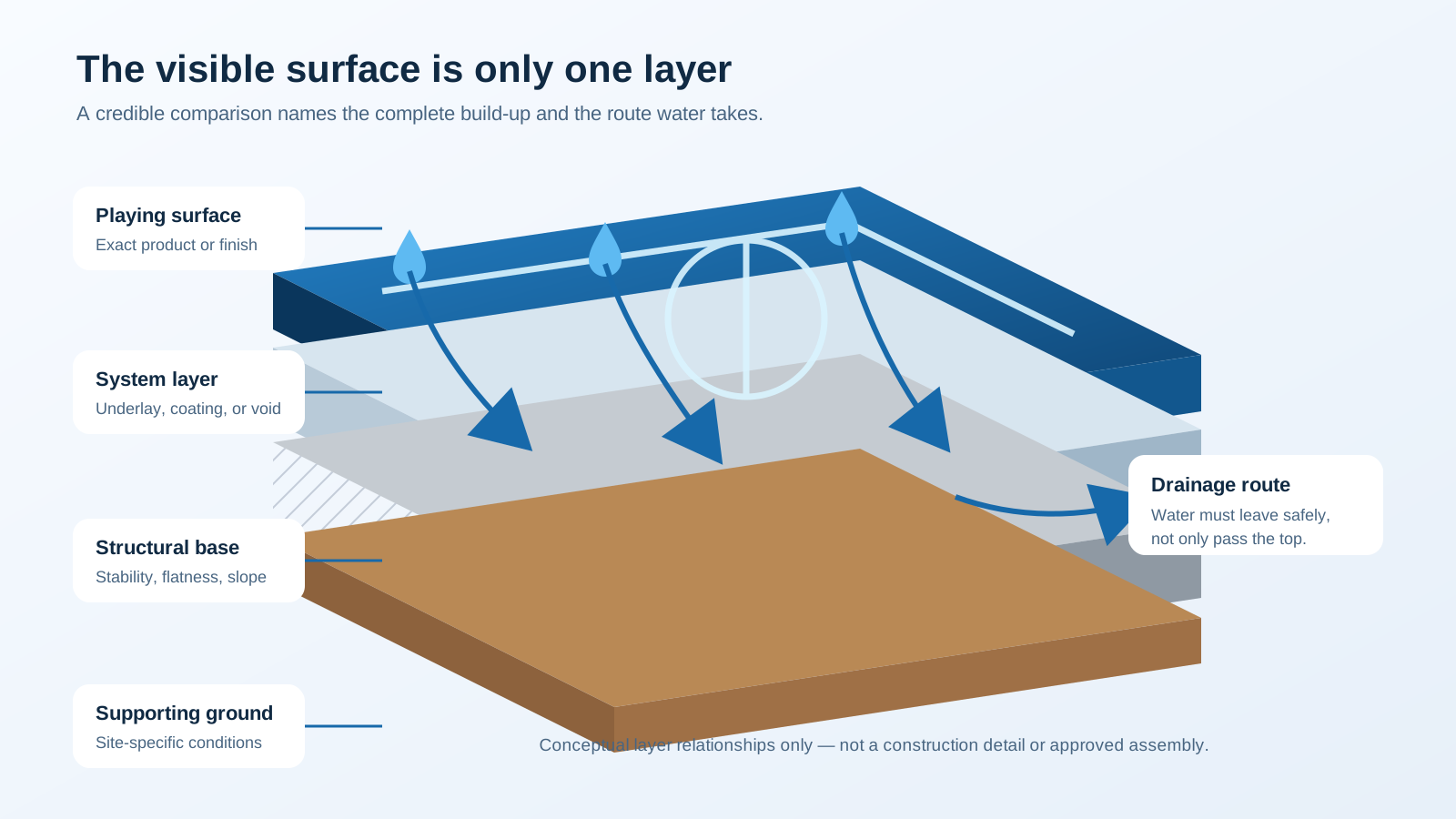
FIBA's outdoor approval framework includes additional considerations such as dimensional stability, ultraviolet weathering, wet slip resistance, and surface infiltration. An open-grid tile can move rainwater through the playing layer, but the water still needs a safe route across or away from the base. Perforations do not repair a slab that ponds, heaves, or directs water toward buildings.
Heat deserves separate attention. Dark colors, direct sun, still air, and local climate can raise surface temperature. Modular systems also need room to move as conditions change. Expansion space, anchoring, edge details, and temperature conditioning must follow the exact system; a dimension copied from another brand is not a safe substitute.
Courtily has not represented the products in this guide as FIBA Approved. The FIBA references explain what an independent outdoor approval program examines and help buyers ask better questions; they are not endorsements of Courtily or of every modular tile.
The base remains part of the playing system
A modular tile, coating, or rubber layer cannot make a failing base disappear. Movement, settlement, severe cracking, soft asphalt, abrupt transitions, contamination, and trapped water can affect support and consistency above. The first inspection should therefore cover the full area, not only the spot where a sample looks good.
FIBA's outdoor venue guidance emphasizes stable ground conditions and planned drainage. It discusses asphalt, paving slabs, and foam concrete as possible sub-base approaches within its venue context, each with different permeability and stability considerations. A residential project may use a different engineered assembly, but the same principle holds: the base and drainage strategy must be selected together.
Before covering an existing court, document cracks, low areas, surface movement, previous coatings, drains, slopes, fixed equipment, surrounding edges, and accessible transitions. Obtain qualified site advice when the cause of movement or ponding is uncertain. Courtily currently supplies Court Tiles, samples, and digital layout and quantity guidance; it does not claim to engineer or construct the base.
Sources: [1]
Compare lifetime cost without relying on generic averages
Published price ranges often combine different court sizes, regions, base conditions, labor scopes, coatings, accessories, and tax assumptions. A single installed cost per square foot is therefore a poor basis for comparing projects unless the scope is identical.
Build a project-specific cost schedule instead. Separate investigation and design, demolition, earthwork, base or slab, drainage, playing surface, underlay, markings, transitions, equipment, freight, labor, access, permits, cleaning tools, scheduled maintenance, repairs, and end-of-life removal. Record which items are included in each proposal and which remain the owner's responsibility.
Then compare the service plan: how often the surface must be cleaned or renewed, whether a localized failure can be repaired, how spare material will be stored, and what happens if the base moves. Courtily's product pages show tile prices by square foot, but that product price is not a complete installed-court budget.
Where Courtily's outdoor basketball tiles fit
Courtily's active catalog currently identifies three Court Tile products as both basketball-compatible and outdoor-compatible: Arena X300, Arena X500 Pro, and ZONE Y350. This is an eligibility mapping, not a performance ranking. Display order, price, product names, and the word Pro do not establish which tile is best for a particular site.
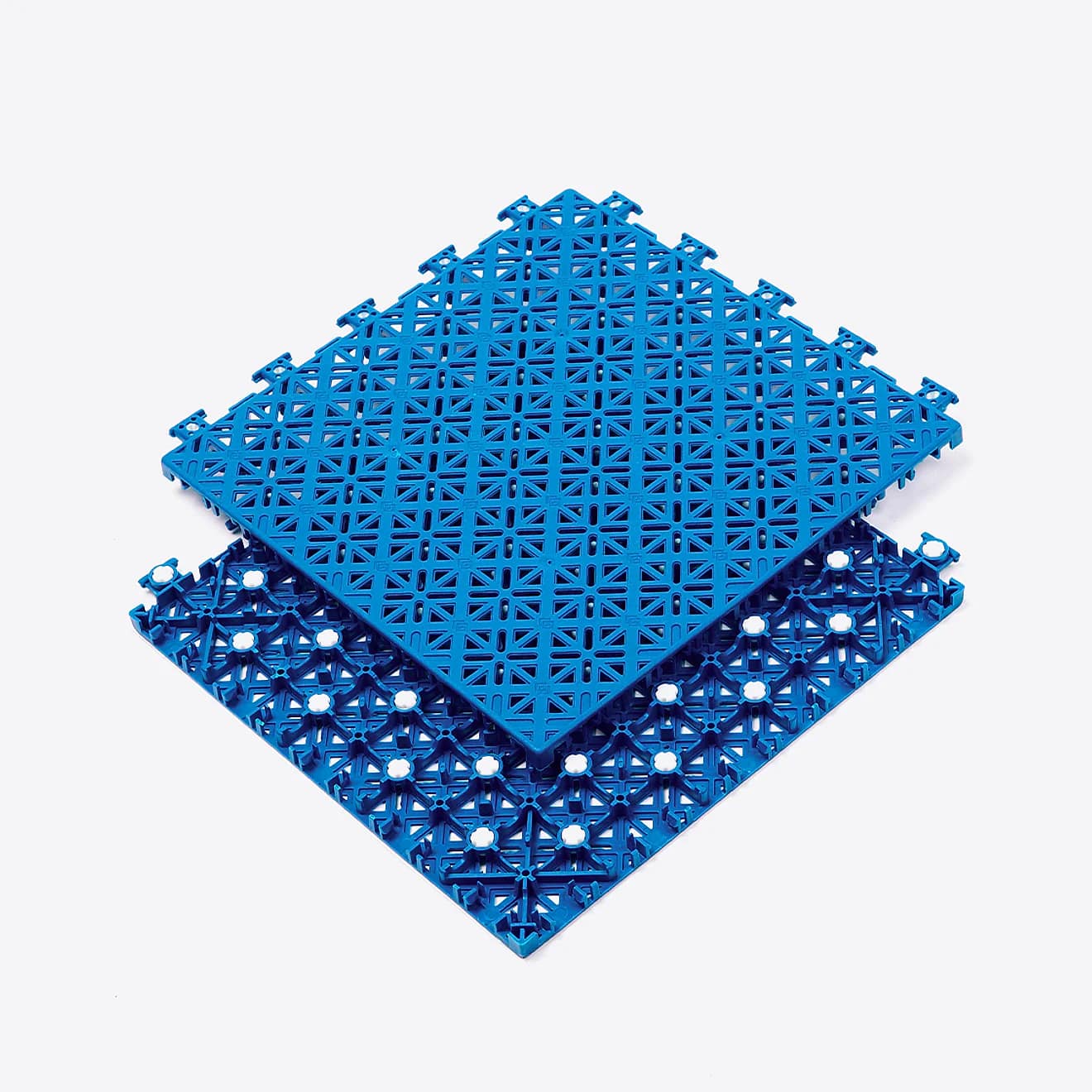
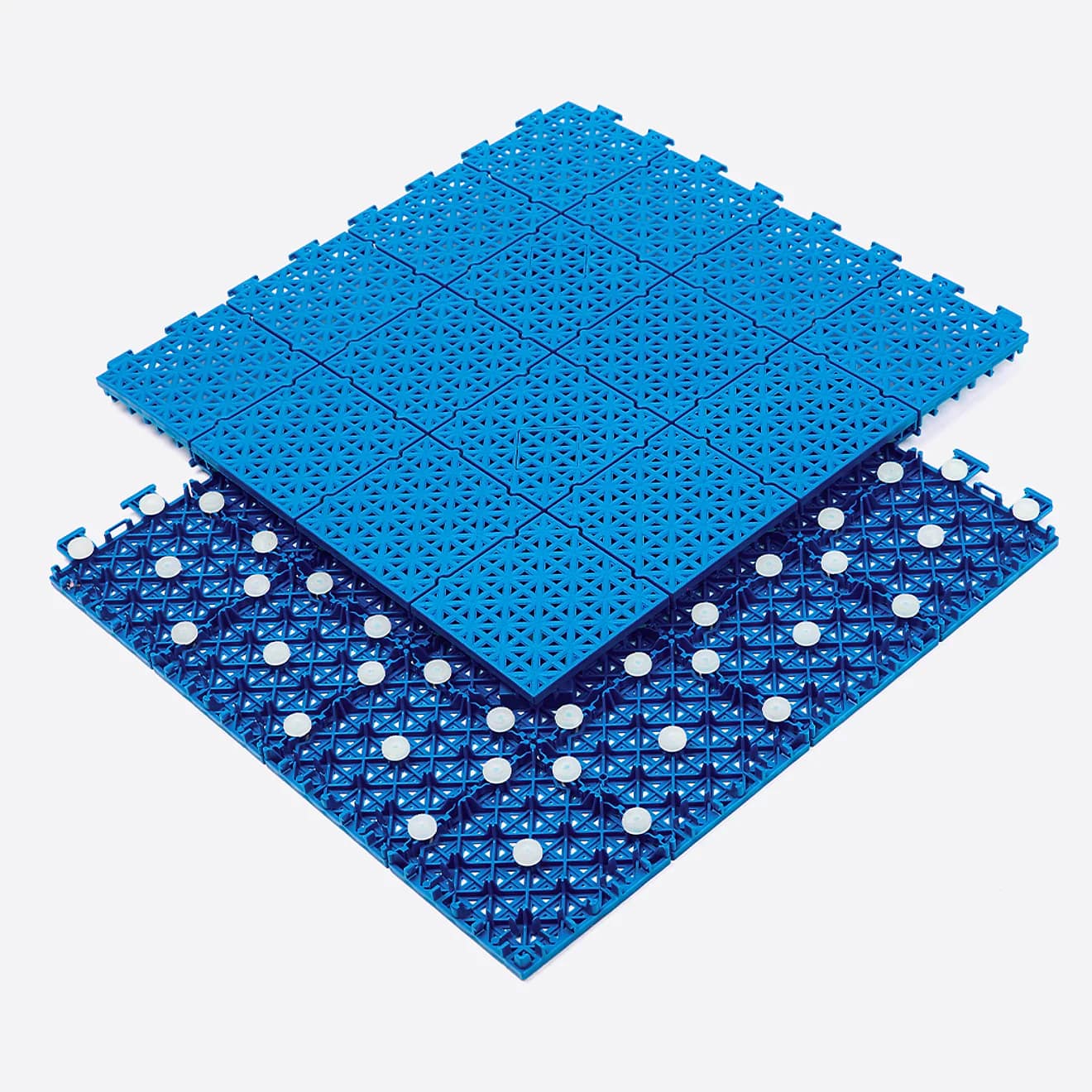
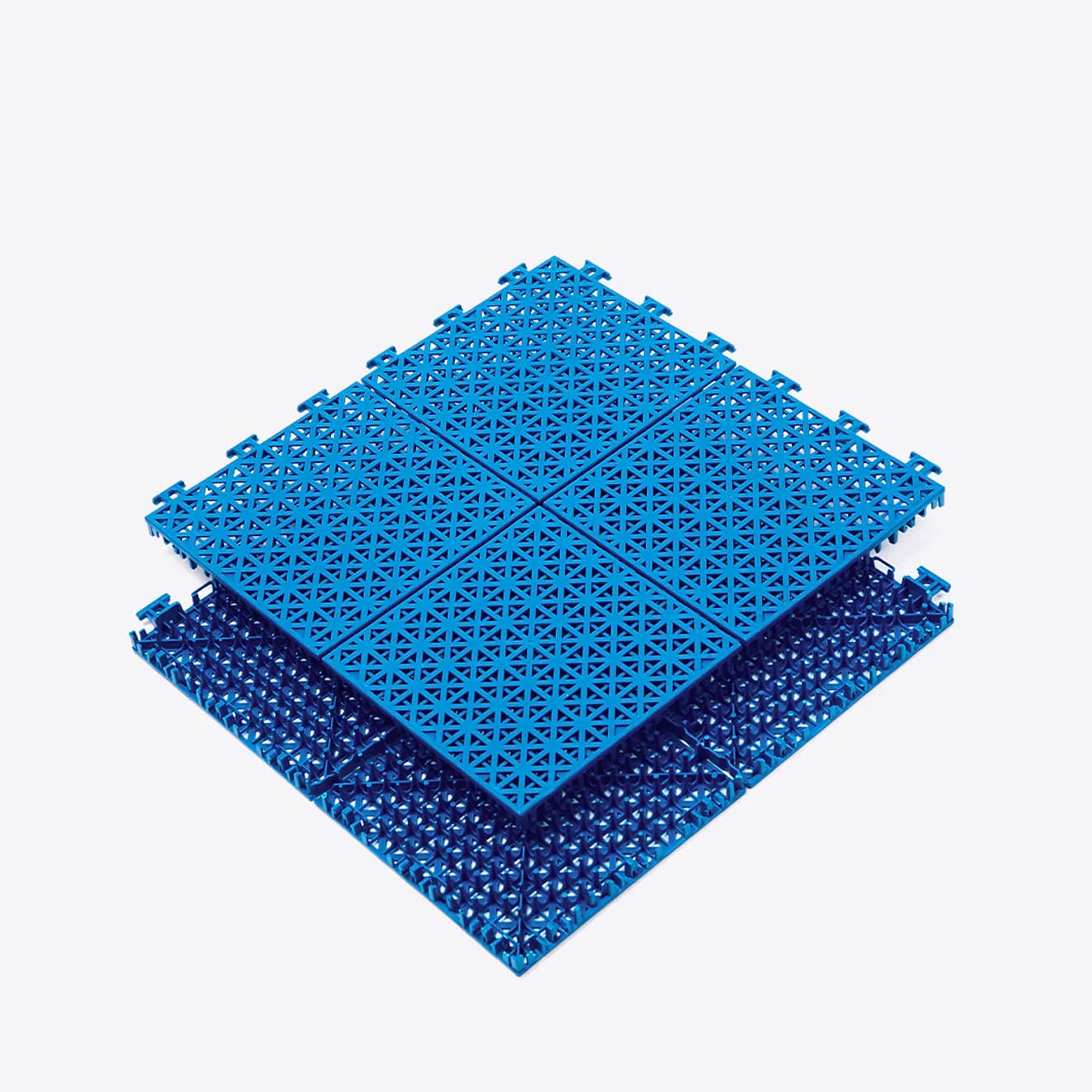
The photos below use approved Courtily product media. They show the visible product construction and verified catalog facts; they do not prove ball-rebound, wet-traction, UV, force-reduction, or FIBA/ASTM compliance. Compare samples and request product-specific documentation before choosing.
Arena X300: confirmed cushioning configuration
Arena X300 is confirmed for basketball, volleyball, hockey, futsal, football, and roller skating in indoor and outdoor settings. The catalog records a 15 mm tile profile and CushMorph cushioning technology with 50 TPE pads. Those facts describe the product configuration; Courtily has not published a comparative force-reduction result or claimed that the configuration prevents injury.
Arena X500 Pro: outdoor basketball eligibility without inferred ranking
Arena X500 Pro is confirmed for basketball and volleyball in indoor and outdoor settings. Approved photography shows its tile field and underside pads, while the catalog records an advanced TPE liner. Its cushioning technology name and pad count remain unconfirmed, so this guide does not infer CushMorph Pro, superior performance, or a ranking from the product name.
ZONE Y350: outdoor eligibility without an independent cushioning claim
ZONE Y350 is confirmed for basketball and volleyball in indoor and outdoor settings. It uses an open-grid visible surface and an elastic connection system. Courtily has confirmed that it does not use a separate cushioning technology; the guide therefore does not add a pad system, material grade, shock-absorption figure, or comfort ranking that is absent from the approved catalog.
What to request before selecting a surface
A credible supplier should be able to identify the exact system being proposed and distinguish tested facts from general material benefits. Ask for documents that match the product, use environment, base, and configuration in your project—not a certificate for another model or an indoor assembly.
- Intended-use statement covering outdoor basketball and the expected facility type
- Ball-rebound method, reference condition, average result, uniformity across test points, and tested system build-up
- Dry and wet traction method, surface finish, and maintenance condition represented by the test
- Outdoor weathering, dimensional stability, temperature range, drainage or infiltration, and color-exposure information
- Approved base types, flatness and drainage requirements, movement clearances, transitions, anchoring, and fixed-equipment details
- Cleaning instructions, inspection intervals, repair procedure, spare-parts availability, and exclusions
- Written explanation of which party is responsible for site design, base construction, installation, inspection, and ongoing maintenance
Frequently Asked Questions
Outdoor basketball court surface FAQ
What is the best surface for an outdoor basketball court?
There is no universal winner. Over a suitable residential hard base, outdoor-rated modular tile can be a strong candidate when drainage, replaceable sections, and manageable upkeep matter. Acrylic, rubber, or a hard court may fit other briefs. Compare the exact product's ball response, traction, weathering, base, maintenance, and budget.
Sources: [1]
Are basketball court tiles better than concrete?
They solve different problems. Concrete can be the structural base or playing surface. Purpose-designed modular tile can add open drainage, replaceable sections, and product-specific resilience, but still needs a suitable base. Ask for evidence for the exact tile; not every plastic tile suits basketball.
Sources: [1]
Do modular tiles change basketball bounce?
Any playing system can affect ball response, and modular tiles differ. Review average rebound and variation across locations, including seams and the installed base. Method, reference surface, ball, build-up, and conditions must match before comparing results.
Does ASTM F2772 certify an outdoor basketball court?
No. ASTM F2772-24 covers performance properties of indoor multi-purpose sports floor systems. Its concepts can help buyers read test reports, but the standard is not outdoor approval or proof that an untested Courtily product complies.
Sources: [3]
Can outdoor court tiles be installed over existing asphalt or concrete?
Some systems allow a suitable hard base, but material name alone is not approval. Inspect stability, cracks, flatness, drainage, contamination, transitions, and movement, then follow the exact tile's current instructions. Settlement, severe cracking, soft asphalt, or persistent ponding needs qualified review.
Sources: [1]
Will a cushioned court surface prevent knee or ankle injuries?
Force-reduction or deformation results describe tested mechanical response, not an injury-prevention guarantee. Player condition, footwear, maintenance, contaminants, weather, technique, and the installed system also matter. Treat medical or safety promises without product-specific evidence cautiously.
How this guide was prepared
Current court-builder and flooring-retailer results were reviewed to identify common buyer questions. Competitor claims were not used as technical evidence.
Technical statements were checked against FIBA, ASTM International, MFMA, and ISSS material. The attached historical documents informed the method explanation; ASTM F2772-24 controls the current title and scope statement.
Product references use approved Courtily catalog fields and media. No laboratory or field test was performed, and no competitor result was transferred to a Courtily product.
Aoife O’Hanlon completed Courtily’s internal product-scope review on September 6, 2026 using first-hand product and full-court installation experience. It is not independent engineering, laboratory testing, or standards approval.
What Courtily verified
- Arena X300, Arena X500 Pro, and ZONE Y350 are mapped to basketball and outdoor use.
- Product images are approved media mapped to their parent SKUs.
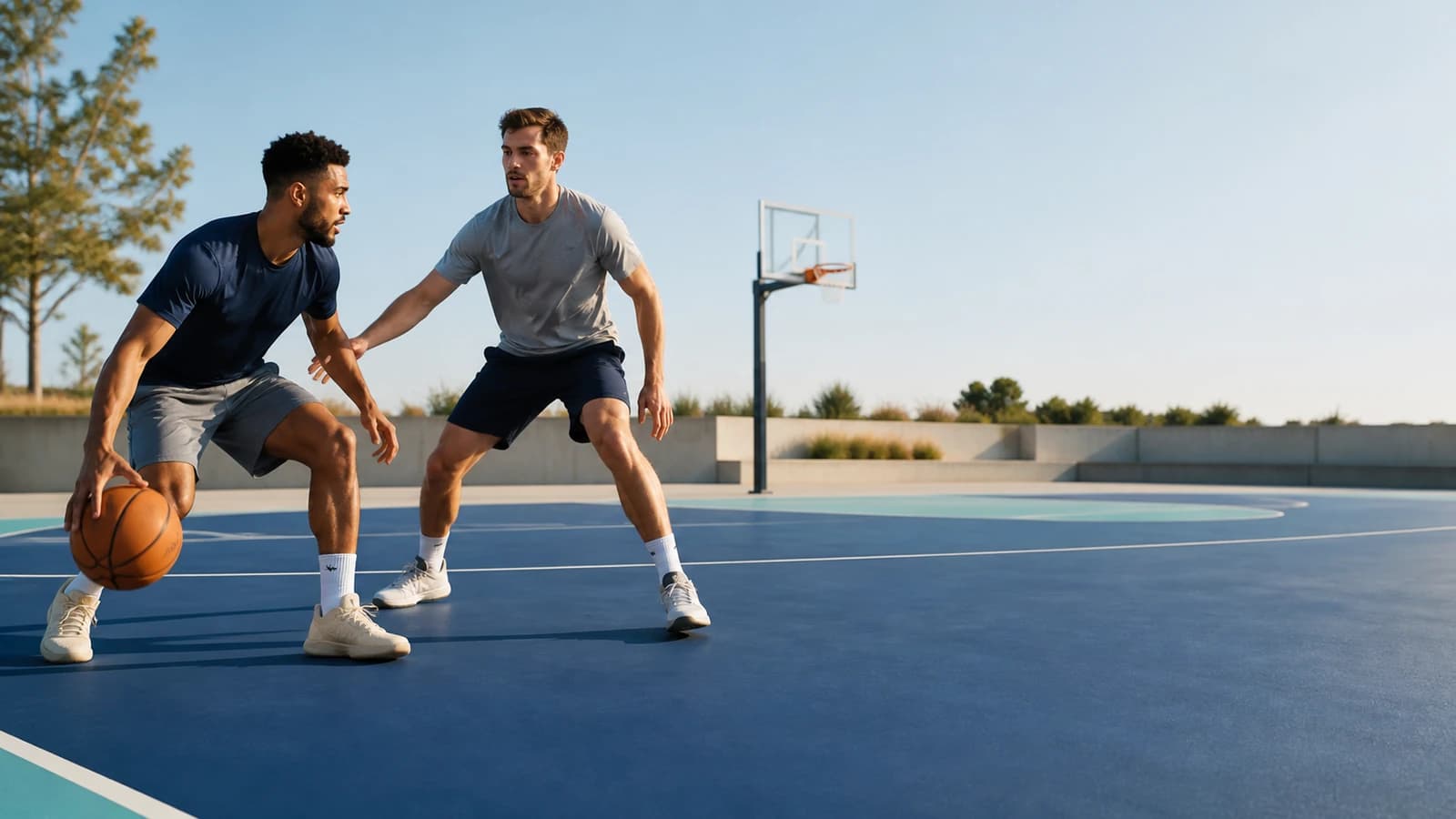
- The AI-assisted hero is disclosed as an editorial visualization, not a customer project or product photo.
- Four original diagrams contain no copied artwork, product score, or compliance threshold.
- No evidence of ASTM compliance or FIBA Approval has been supplied for these products.
Commercial disclosure and scope
Courtily sells Court Tiles, offers physical samples, and provides paid digital Custom Design for layout and quantity guidance. Product links in this guide are commercial links to Courtily's catalog. Courtily does not currently claim to provide subsurface engineering, concrete or asphalt construction, drainage design, professional installation, equipment foundations, permitting, or site inspection. The comparison includes non-Courtily surface categories so readers can evaluate whether modular tiles fit their project.